
Plug it in. It does the rest.
No installer, no appointment, no tools.
Five minutes, start to finish.
If you can plug in a phone charger, you can set up Miles.

Download
Scan the code inside the box lid to get the Miles app, then follow along: name your car, save your places, invite your family. A few taps each.

Plug
The app tells you when. On a compatible vehicle, find the diagnostic port under the dashboard, usually just left of the steering wheel. Push Miles Plug in until it seats. That is the entire installation.

Drive
Take your first trip. By the time you are back, Miles has introduced itself: a recap of the drive, a first read on the car's health, and everything running quietly from here on.


Stuck happens. Stranded doesn't.
Dead battery, flat tire, empty tank, keys locked inside, a tow up to 25 miles.
One membership covers the whole list, 24/7, in all 50 states.
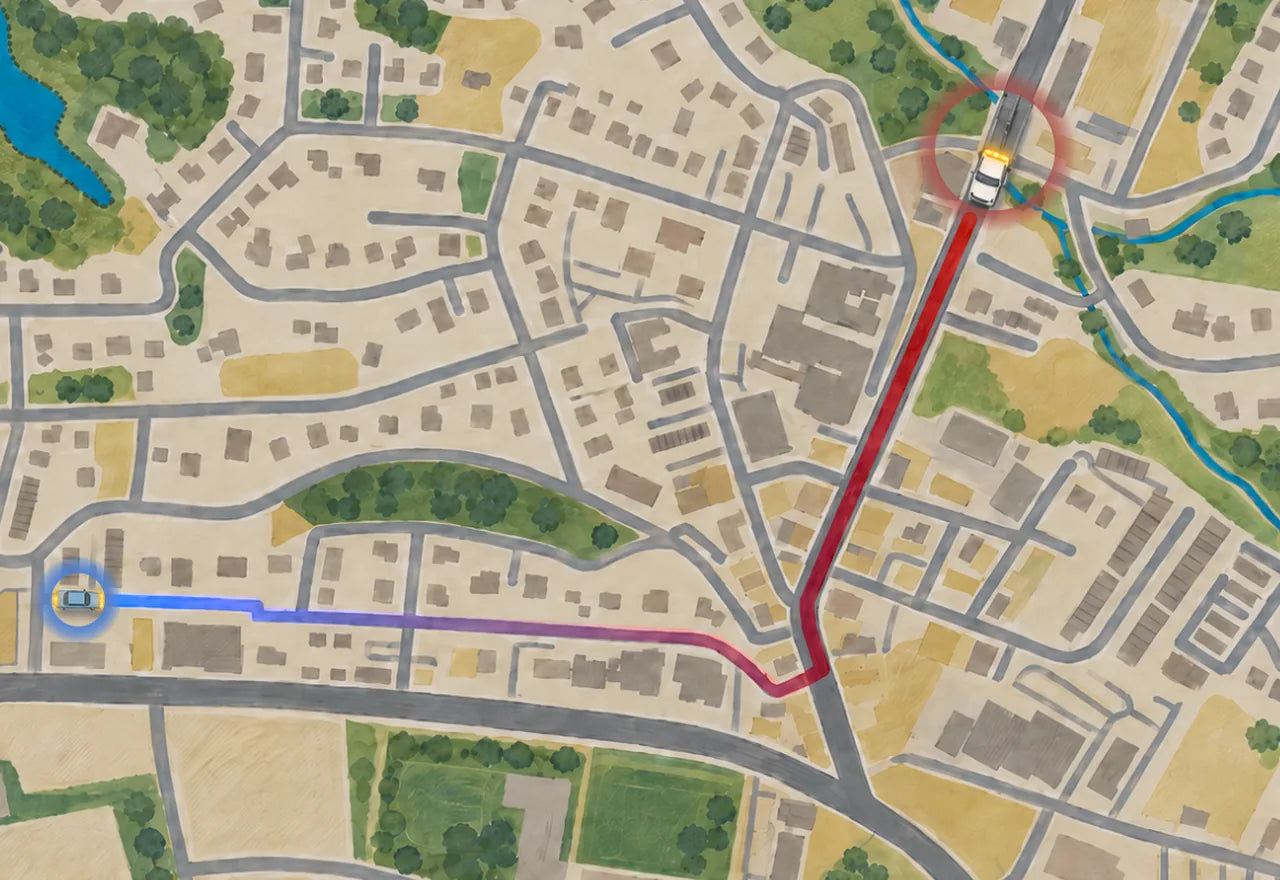
A few taps, not hold music.
Pick the problem, confirm your location, and help is on its way. No waiting on someone to answer, no address to recite, no price to haggle.
Watch help come to you.
Follow the verified, background-checked driver on the map, ETA and all. Never wonder if they're coming.
Nobody waits alone.
The whole family sees the same map: help on the way, everyone in the loop.
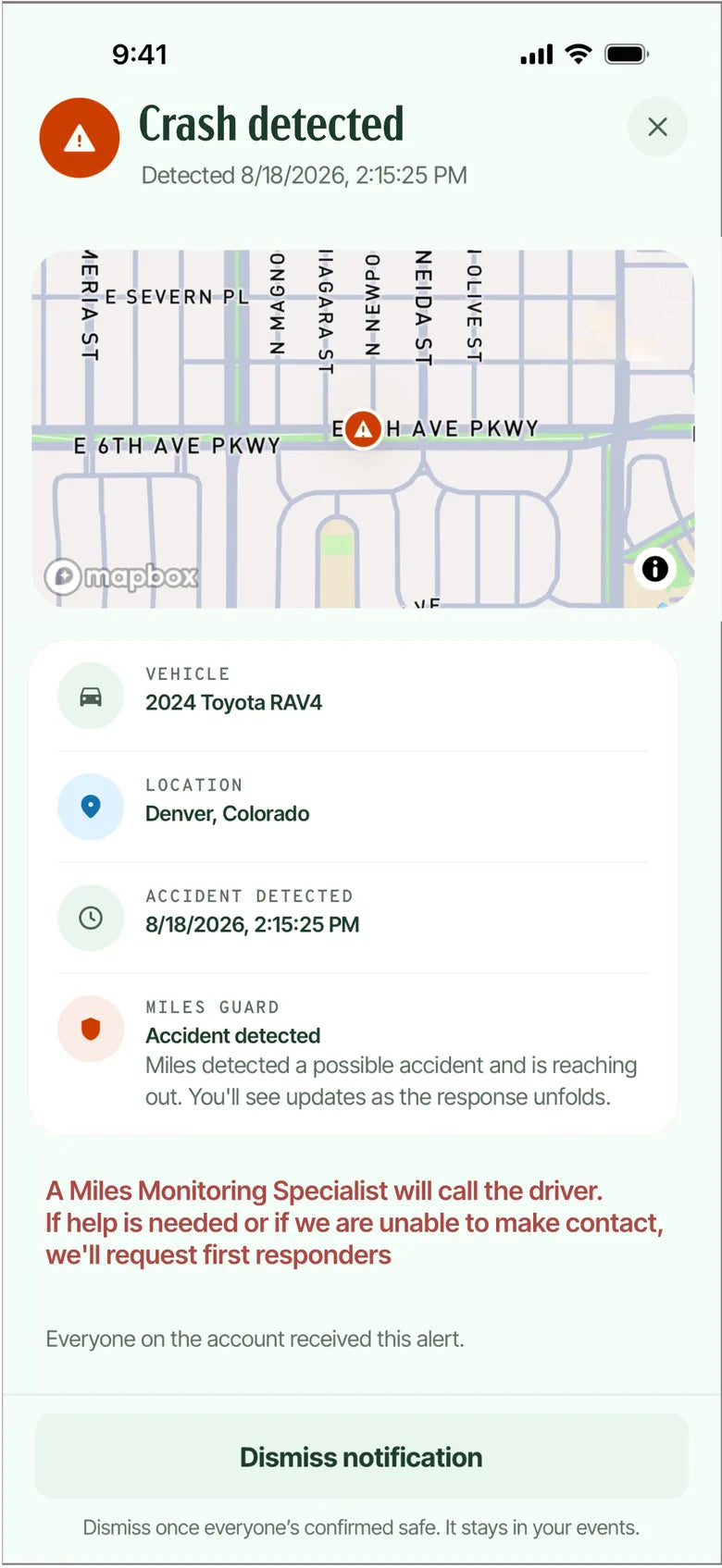
Help that doesn't wait to be asked.
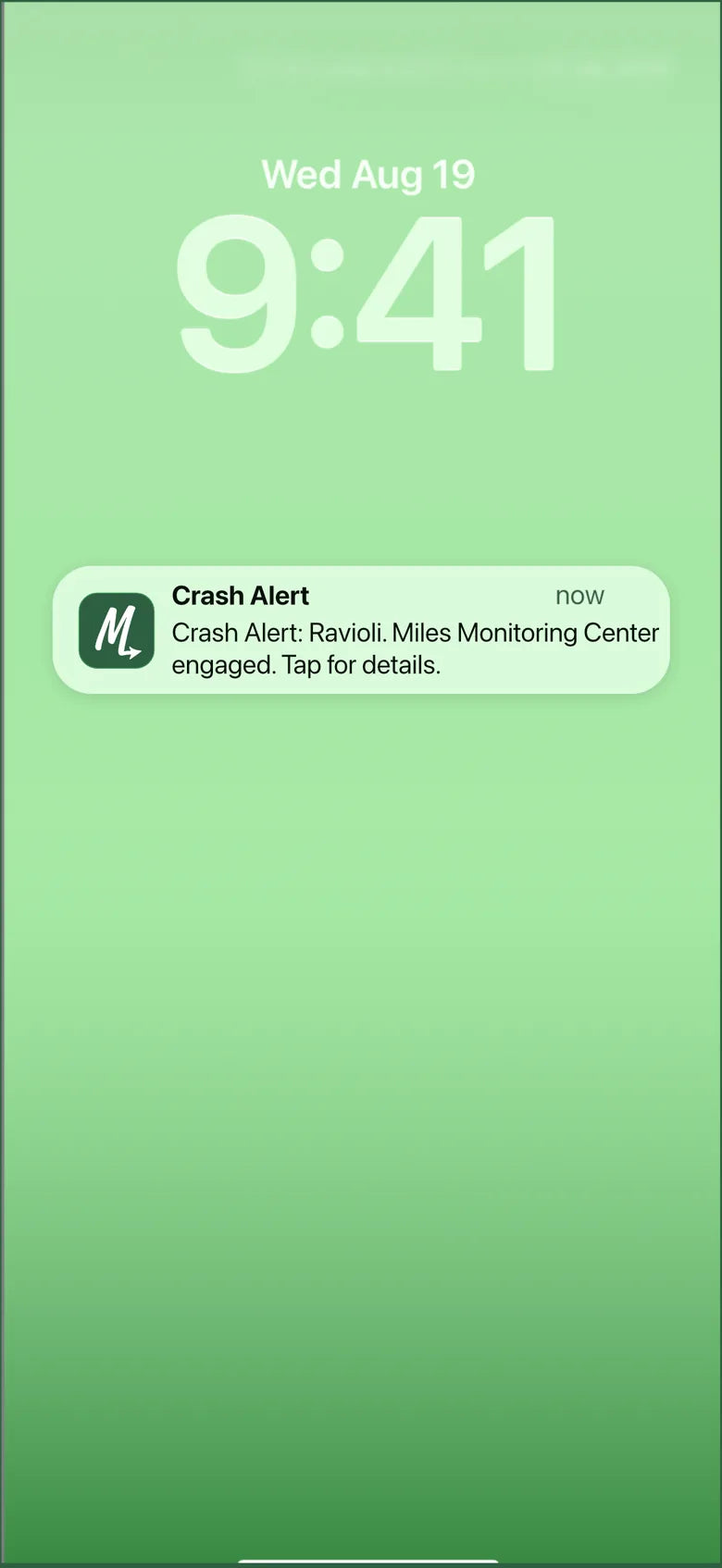
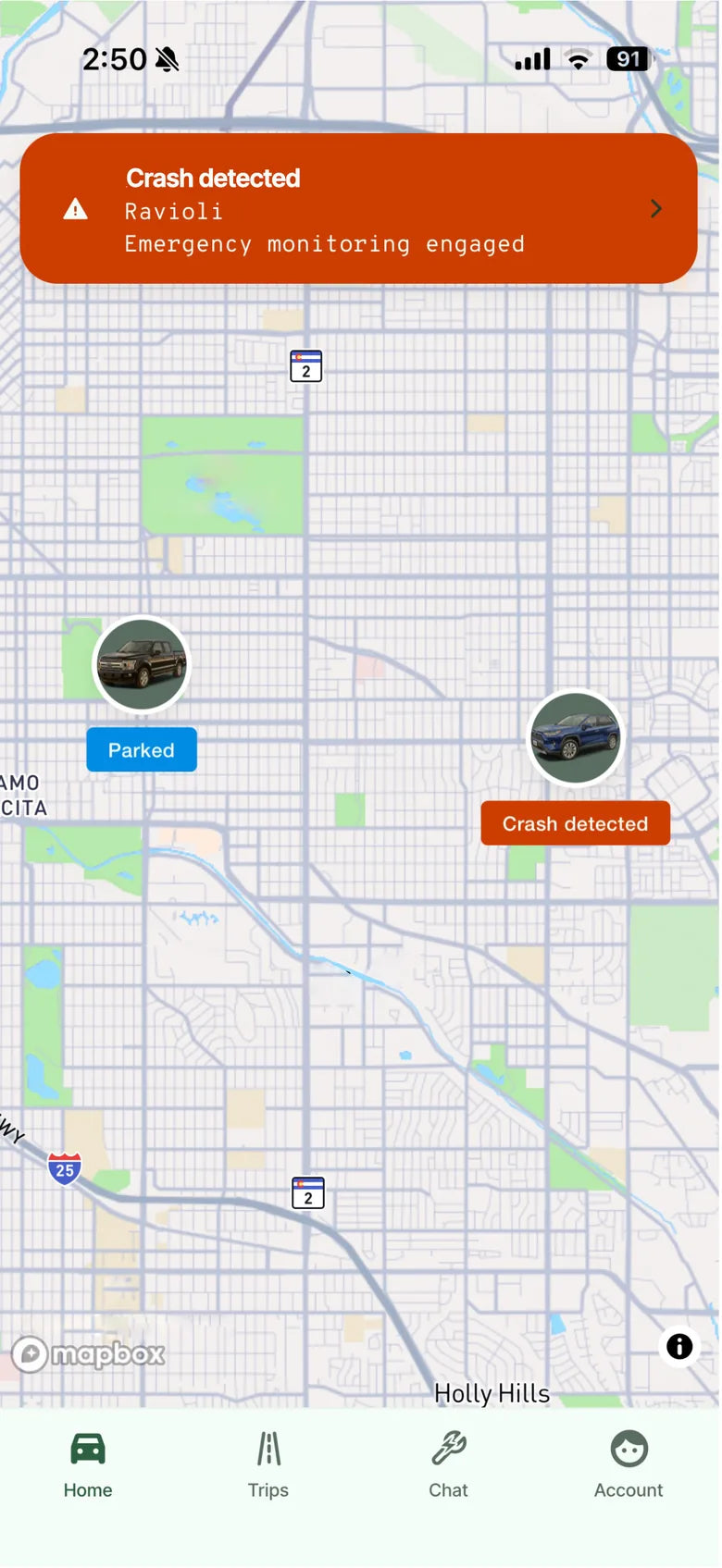
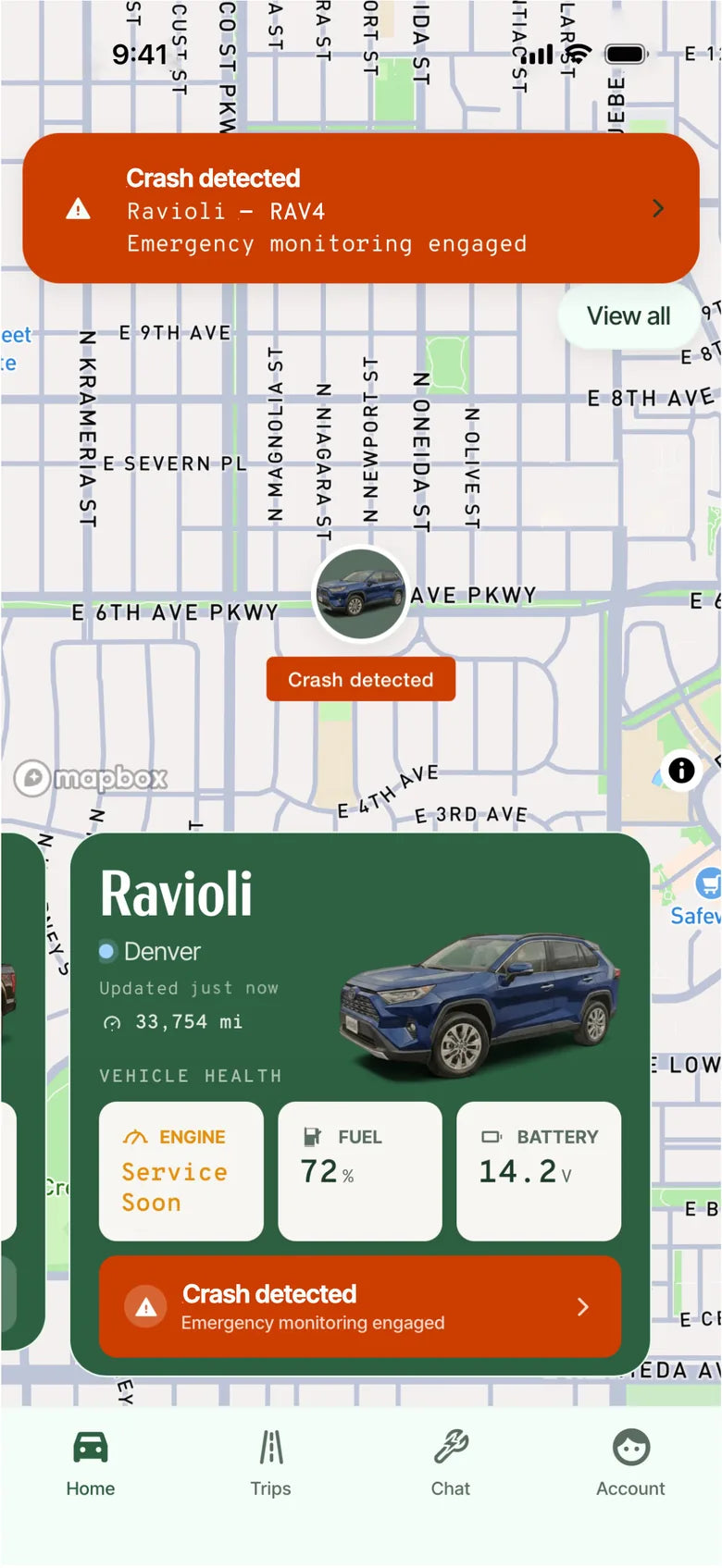
Most of Miles you'll use every day. Guard is the part that acts on its own, on the one drive when no one can. No button to press. No phone to find.
Miles feels it.
Onboard sensors detect the force of a serious crash the instant it happens.
Your people know.
Emergency contacts get an alert with the car's exact location.
Help is dispatched.
Trained agents confirm and request emergency services, even if no one can answer.
Less than an ounce. More than a plug.
Here's how Miles knows what it knows.
It reads the car
A direct line to the engine, battery, emissions, and fuel.
It feels the road
Motion sensors notice hard braking, speed, and the jolt of a crash.
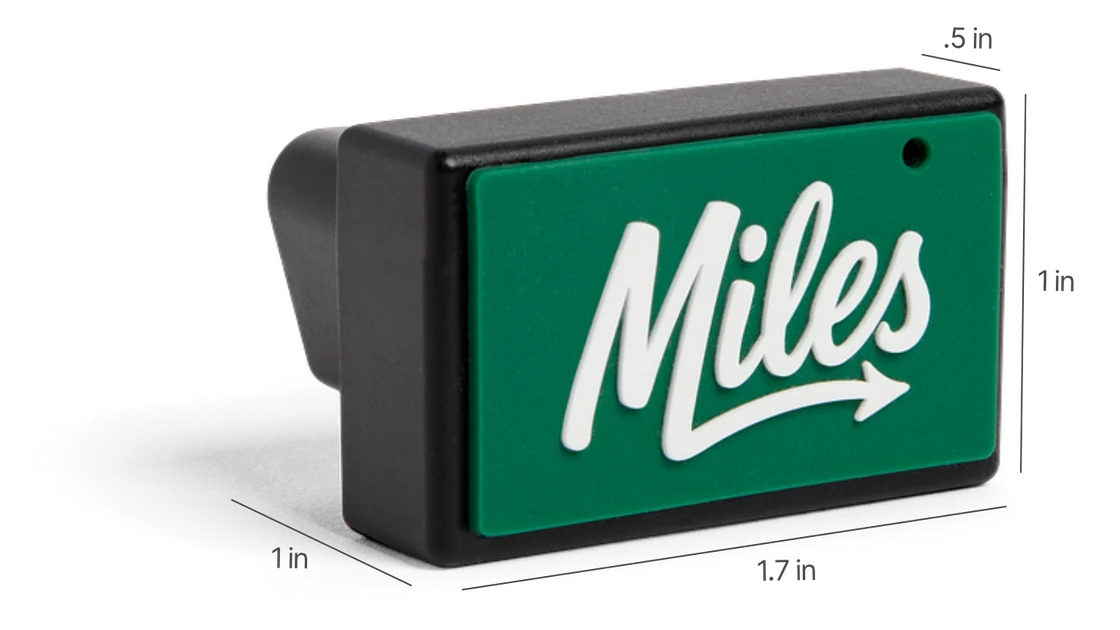
It speaks for itself
Built-in GPS and cellular; no phone required, ever.
It disappears
Silent, no wires, no screens. It tucks into the port under the dash and just gets to work.
Everything Miles knows shows up in the app, in plain English.
Kind to your car.
When the car sleeps, Miles sleeps.
On the road, Miles draws its power from the running car. When you park and shut off the engine, Miles goes to sleep too, waking only briefly to check in before nodding back off.
Built to automotive standards. And then some.
Protection against voltage spikes and static beyond what automotive standards require, an operating range from 40 below zero to well past any heat a car can throw at it, and the same standard connector your mechanic's tools use. Miles is built to work with your car, never against it.


A year with Miles.
Some of what Miles does shows up on day one. The rest earns its keep over the seasons.
-
August
Plugged in and paired in five minutes. By dinner, the first drive is recapped and the car has had its first full checkup.
-
September
Check-engine light. Miles Mechanic reads it before your stomach drops: loose gas cap, not a catastrophe. Fixed in the driveway, light gone.
-
October
Miles flags a weakening battery. You replace it on a mild Saturday instead of a January parking lot.
-
November
Left school 3:04. Arrived at practice 3:19. You knew without asking, and nobody had to check in.
-
December
An oil change comes due, based on miles actually driven, not a sticker on the windshield. Miles lists what's due and what isn't, so when the shop suggests the works, you know exactly which part to decline.
-
February
A flat tire on the side of a busy road at night. A few taps, and a verified driver is on the way, followed the whole time, while Miles shares the car's exact location with your family.
-
March
The light comes back, and this time it's real. Miles explains what it is and roughly what it should cost. You book the shop visit with specific questions and a fair number in mind. A small fix now instead of a big one in June.
-
April
A new driver in the house. Same app, same shared view, their own record from drive one. The nudges do the reminding so you never have to.
-
May
A speed alert after Thursday's drive. That's a quick conversation about a number, not an argument about trust. Same screen, same facts, and when they drive well, it says that too.
-
June
A fender bender in a parking lot. Miles feels it, checks in, and lets your people know where you are. Nothing serious this time, and if it had been worse, help would already be moving.
-
A year in
The car's whole story lives in the Digital Glovebox: every service, every problem caught small, eleven months of little saves. Worth real money when you sell, and hard to imagine driving without.
The longer Miles rides along, the more it knows and the more it saves.
Fair questions, straight answers.
What if the car loses cell coverage?
Drives still record. Everything syncs the moment the car is back in range.
What if the phone is dead, or home on the counter?
Miles has its own GPS and cellular; it stays connected on its own.
What if someone unplugs it?
Miles goes quiet, and it shows as offline to everyone in the family, driver included. Nothing is hidden in either direction.
What if it thinks a pothole is a crash?
When Miles detects a possible crash, a monitoring specialist calls to check on you first. Say you're fine, and that's the end of it. No answer, and help is on the way.
Why Miles has a membership.
Miles Plug has its own GPS and cellular connection, like a phone. Your membership keeps the car online everywhere it goes, keeps every trip and alert flowing, and keeps the roadside assistance and emergency response center staffed around the clock.
Works in most cars. Even the hand-me-down.
Miles plugs into the port your car already has. No wires, no tools. Choose your make, model and year to check compatibility.
If yours is the electric version, Miles doesn't work with it yet.
Still wondering?
Will it really not drain my battery?
A healthy car battery is built to sit two to four weeks without a drive. While parked, Miles Plug enters a low power state and only wakes briefly to check in. The small amount of power used by Miles does not notably impact the battery.
Miles also keeps an eye on battery health, so it is often the first thing to warn you when a battery is getting weak.
Storing your car for more than a couple of weeks? Unplug Miles. It picks up right where it left off when you plug it back in.
Is my family's data private?
Your family's privacy comes first. Your data is encrypted, and we never sell your vehicle, trip or location information. You stay in control of what you share.
We make money from memberships, not from ads and not from your data. You're the customer, not the product.
Does Guard cover the driver, or the car?
The car. Crash response and roadside help are tied to the vehicle with Miles plugged in, no matter which family member is behind the wheel. Stuck in a family car that doesn't have Miles yet? Members can still request roadside for it in the app as a one-time, pay-per-use service.
Can my teen see what I see?
Yes, that's the point. Everyone in the family sees the same trips, the same map, the same recaps. No hidden big brother mode.